

Why Your Small Business Website Matters
Before we dive into comparisons, let’s understand why your website is the foundation of your business growth.
- A website acts as your digital storefront – open 24/7.
- 75% of users judge a company’s credibility based on website design.
- 88% of online shoppers won’t return after a poor website experience.
- With rising competition, small businesses need a professional website design to stand out.
If you’re running a small business, investing in the right web design services for small business is no longer optional – it’s essential.
Shopify vs WordPress: A Quick Overview
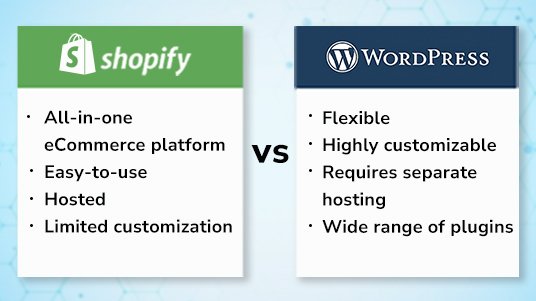
Shopify is an all-in-one E-Commerce platform designed for businesses that want to sell online. It takes care of hosting, security, and technical maintenance, so you can focus on running your store.
Key Features:
- Hosted solution (no separate hosting needed)
- Drag-and-drop store builder
- Integrated payment gateways
- Inventory and order management
- 24/7 support
WordPress
WordPress is the world’s most popular Content Management System (CMS), powering over 40% of websites worldwide. With Woo Commerce, it can be turned into a full-fledged eCommerce store.
Key Features:
- Open-source platform
- Thousands of plugins & themes
- Full customization and flexibility
- SEO-friendly architecture
- Requires separate hosting & maintenance
Shopify vs WordPress: Detailed Comparison for Small Businesses
1. Ease of Use
- Shopify: Ideal for beginners with no coding knowledge. Its drag-and-drop editor makes setting up a store quick and simple.
- WordPress: More flexible but has a steeper learning curve. Managing themes, plugins, and hosting requires some technical knowledge.
Conclusion: If you want simplicity, go for Shopify. If you want custom small business website design, WordPress gives more control.
2. Cost and Pricing
- Shopify: Monthly plans starting from $29, with additional costs for premium themes, apps, and transaction fees.
- WordPress: Free software, but costs include domain, hosting, themes, and plugins.
3. Website Design & Customization
- Shopify: Offers sleek templates but customization is limited without coding.
- WordPress: Endless customization options with themes and plugins. Perfect for web design services for small businesses that want unique branding.
4. SEO (Search Engine Optimization)
- Shopify: Comes with built-in SEO features but limited flexibility.
- WordPress: Known as the most SEO-friendly CMS. With plugins like Yoast SEO or Rank Math, small businesses can easily optimize content.
5. Scalability
- Shopify: Best for E-Commerce growth – you can scale easily with apps and integrations.
- WordPress: Scalable with the right hosting and development support. Suitable for businesses that want more than just E-Commerce.
6. Support and Maintenance
- Shopify: 24/7 dedicated support.
- WordPress: Support depends on the hosting provider or a web design company managing your site.
7. Payment Gateways & Transaction Fees
- Shopify: Supports multiple payment gateways but charges extra transaction fees if not using Shopify Payments.
- WordPress (Woo Commerce): Flexible with numerous payment gateways, usually with no extra fees.
Shopify vs WordPress: Which One Should Small Businesses Choose?
- Choose Shopify if:
- You want a hassle-free E-Commerce store.
- You prefer an all-in-one solution.
- You don’t want to deal with hosting or maintenance.
- Choose WordPress if:
- You want a fully customizable small business website design.
- SEO and content marketing are key growth strategies.
- You have a trusted website development company/agency to manage your site.